Not long ago, BP was sitting in the mid-$30s. It felt steady.
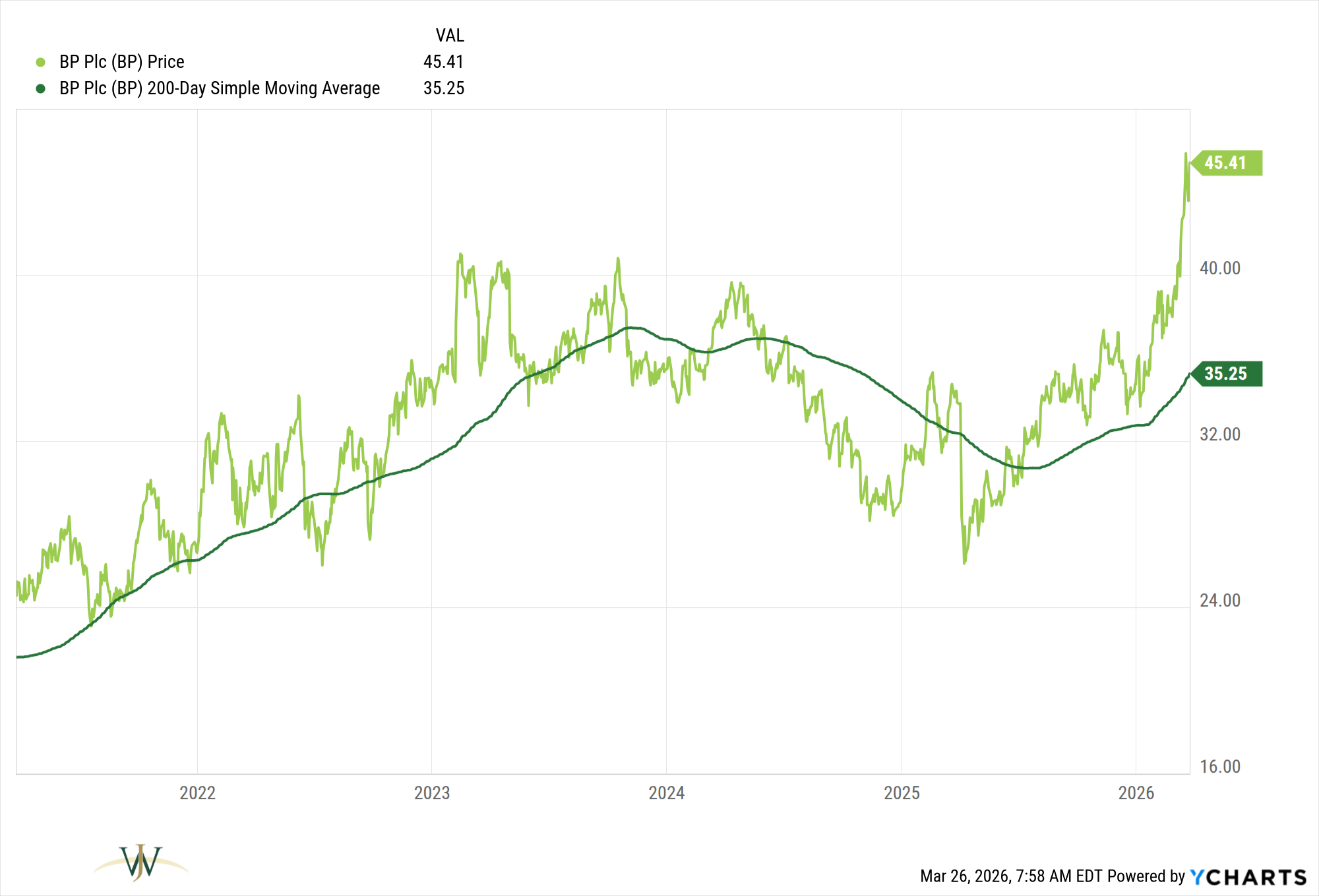
Now, as I write this, BP plc is trading around $45.41—well above its 200-day moving average near $35.
We were hoping it was stabilizing as it slowly pushed towards $35--nowhere near the all-time high of mid $70’s that we saw in 2007 before Deepwater Horizon Oil spill changed the company’s trajectory, but progress nonetheless.
This sudden spike changes the question.
A few months ago, the question was whether what we were seeing was a recovery, and whether it was sustainable.
Now it’s something different: should I do something with my BP stock now?
Past performance is not indicative of future results. This report has been generated through application of the analytical tools and data provided through ycharts.com and is intended solely for conducting investment research. The investment examples set forth in this presentation should not be considered a recommendation to buy or sell any specific securities. There can be no assurance that such investments will remain in the strategy or have ever been held in a WJA strategy.
What Changed for BP Stock in 2026
We all know this isn’t a story where fundamentals have meaningfully improved from the beginning of 2026.
For most of the last two years, BP hasn’t been a strong performer. The stock has been flat to down since early 2023.
There are reasons for that:
-
- A strategic pivot, moving away from “Beyond Petroleum” and back toward traditional energy to prioritize returns has not been without cost
- CEO turnover created uncertainty around long-term direction
- A higher debt load is forcing asset sales to strengthen the balance sheet
None of those issues has been resolved since the new year began, which tells us something we all already know:
This recent uptick in BP's stock price isn’t primarily about the business suddenly getting better.
Why BP Stock is Rising
We all know this is an oil-driven move due to the supply shocks given the war in Iran.
The blockage of the Straight of Hormuz has pushed crude prices higher in a short period of time. When that happens, companies like BP tend to move with it.
That relationship is well understood.
Why Holding BP Stock Feels Different Right Now
A stock that’s gone nowhere for two years and then breaks higher feels more meaningful than it is.
Not because the move isn’t real. But because it’s different from what we’ve experienced recently. And that’s where psychology starts to take over.
Behavioral Investing: The Mistakes We See From BP Employees
Our minds are wired to take recent trends and extend them into the future.
After a strong run:
-
- The latest move starts to feel like the new baseline
- The idea of continued gains feels more likely
- The risks fade into the background
Even if nothing fundamentally changed.
And then the internal dialogue starts to shift:
“Maybe BP could get to $45, $50?”
“There’s no clear end in sight to the Iran conflict.”
“It feels like this could keep going.”
“We’re destroying oil production in the gulf.”
“I don’t want to sell too early if the war will last months.”
“...at least my BP stock will make money when the rest of the stock market is down.”
If the conflict continues, oil may stay elevated. If oil stays elevated, BP may continue to benefit.
It starts to feel like a straight line. But it’s not.
These situations can shift quickly through diplomacy, policy changes, or supply responses, and when they do, prices often adjust just as fast.
And if BP stock can run up fast, it can fall fast.
A Better Question to Ask
Instead of focusing on where oil prices might go next, try reframing it:
If you didn’t already own BP today, would you buy the stock at $43?
That question tends to cut through the noise.
Because holding something you wouldn’t buy is usually a signal, not about the stock, but about your decision-making process.
What Should You Do With BP Stock Right Now
At this price point, owning BP isn’t just exposure to a company.
It’s exposure to:
-
- Oil prices remaining elevated
- Continued geopolitical tension
- Ongoing supply constraints
If those persist, the stock could move higher. If they don’t, it could retrace.
That’s the trade you’re making, whether you realize it or not.
BP Shareholders: Should You Sell BP Stock?
For many people, BP stock isn’t just an investment; it's part of their compensation.
That often includes:
-
- Shares that have already vested
- Stock options that have inherent leverages
So, when the conversation of liquidating a position comes up, it’s hard for many people to sell.
I always remind people that even if they sold everything they could in their brokerage account, they would still be exposed as an ‘investor’ due to:
-
- granted unvested shares
- bonus performance factor
Don’t Ignore the Tax Side
This isn’t just a price decision; it’s an after-tax decision.
-
- Selling shares may trigger capital gains
- Option exercises can create ordinary income
A strong move like this can create opportunity, but only if you’re thinking about what you actually keep, not just what the stock does.
In a year when our clients are realizing large capital gains from selling BP stock, we’re setting a lower capital gains budget for their brokerage account, tax-loss harvesting in their portfolio to offset gains, or considering contributing appreciated stock to a donor-advised fund to help mitigate taxes.
The Takeaway: What to do with BP Stock?
BP moving above $40 feels significant.
But what matters more is this: After a long stretch of underwhelming performance, we’re seeing a run in the share price. Is it time to evaluate what to do with your BP Shares and take action?
What to Do Next with BP Shares
These are the exact conversations we’re having with clients right now, balancing concentration, taxes, and long-term planning.
If this is a position you’ve been meaning to revisit, this may be a good time to do it, deliberately and with a clear framework.
Reach out to a member of our team today.